Your website security remains one of the biggest priorities for our development team. Updates, plugin vulnerabilities, authentication, backups, server security and software supply chains all matter, where sites that may have accumulated plugins over several years.
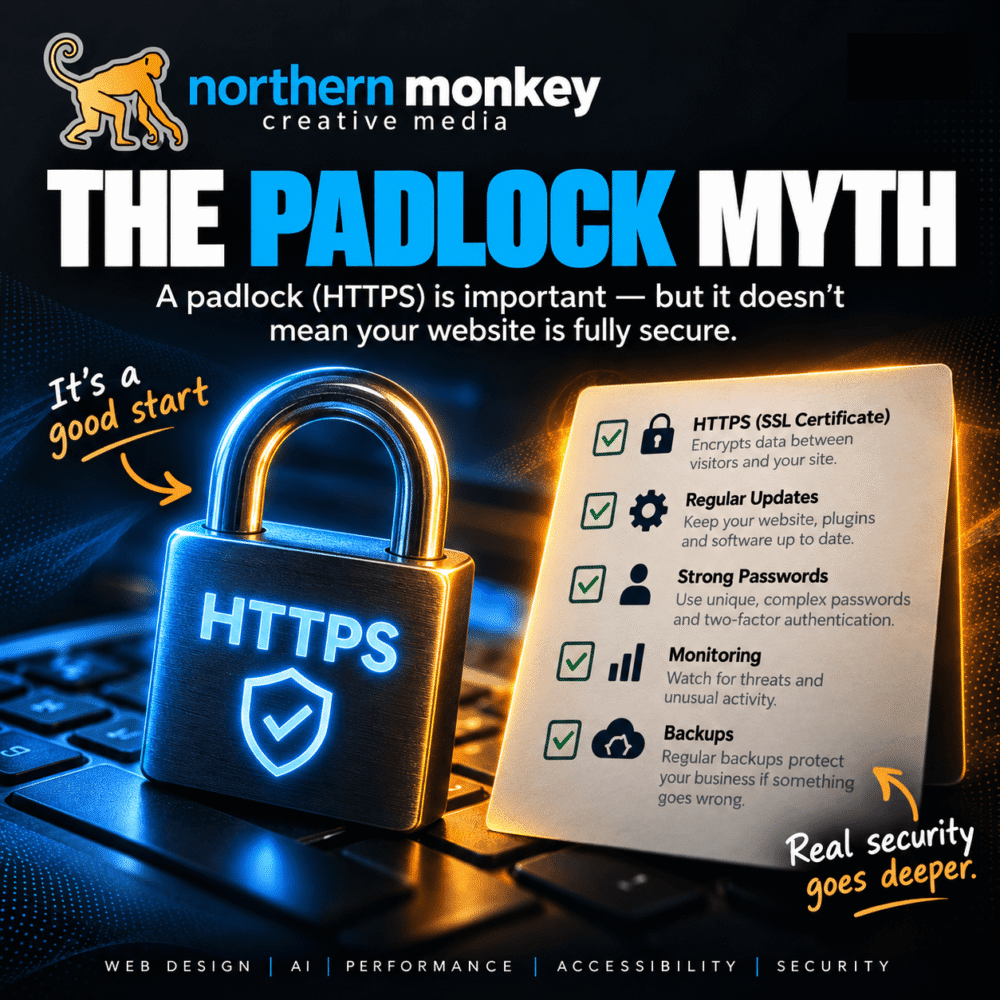
Seeing the padlock in your browser doesn’t mean your website is secure. It simply means the connection between the visitor and your website is encrypted.
That’s important, but it’s only one small part of website security.
A website can have a perfectly valid SSL certificate and still be vulnerable because of things like:
- Outdated WordPress plugins
- An old theme that’s no longer maintained
- WordPress itself not being updated
- Weak administrator passwords
- Plugins that have known security vulnerabilities
- Old user accounts that should have been removed
- Malware or suspicious files sitting unnoticed on the server
WordPress websites aren’t something that can be built and then simply forgot about, they need maintaining.
Updates are released constantly, sometimes to add features or fix bugs, but often to patch security vulnerabilities. The longer a website goes without being looked after, the greater the chance of problems building up.
At Northern Monkey, this is one of the reasons we offer monthly website support and maintenance.
It isn’t just about logging in once a month and clicking “Update All”. We can regularly check the website, carry out updates, keep an eye on security, test key functionality and deal with those little issues that inevitably crop up over time. For some clients that can simply be an hour of maintenance each month, ensuring that somebody is actually keeping an eye on the website.
Just don’t assume the padlock means the job is done.
#WebsiteSecurity #WebsiteMaintenance #CyberSecurity